Do You Have an Anti-Library?
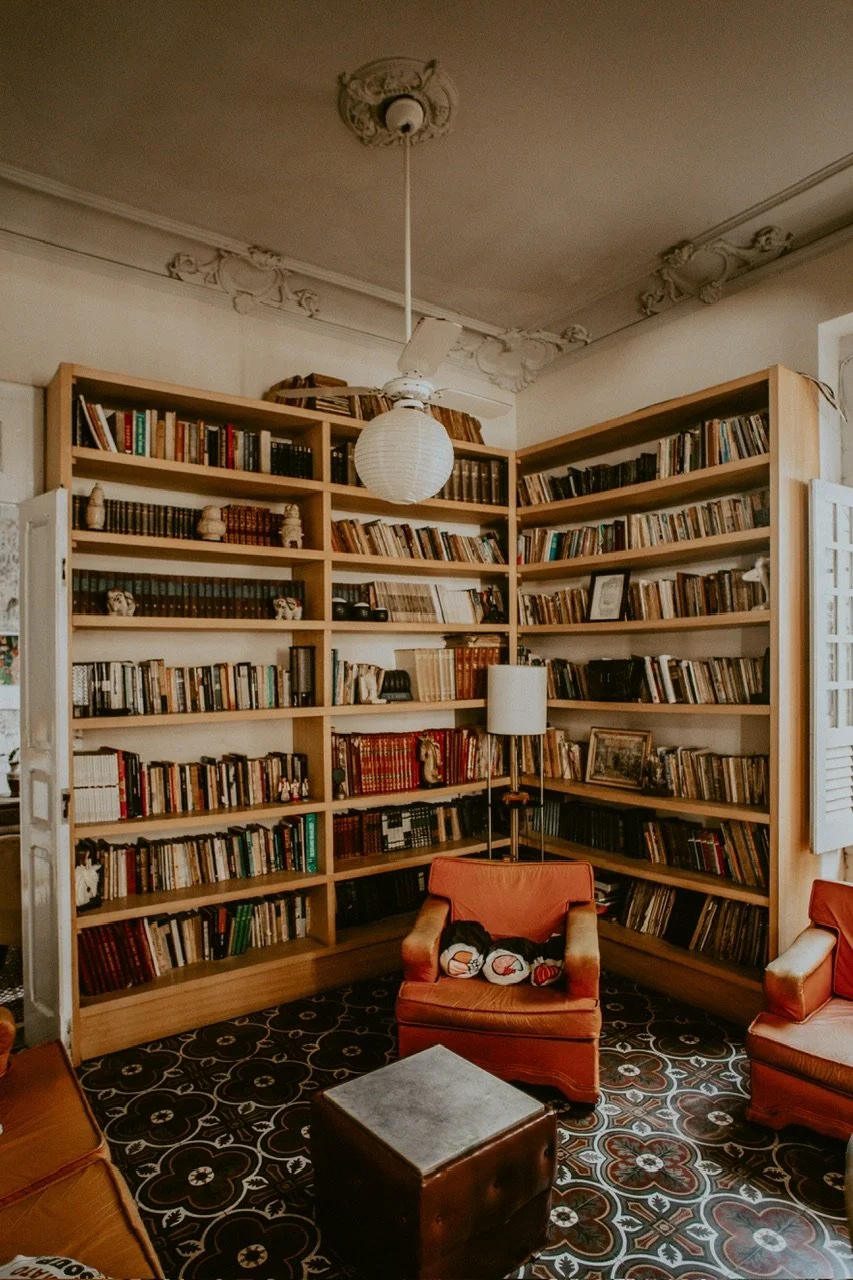
There are two untidy, unread book towers balanced on my desk. Every now and then, I add another book to one of the piles. And occasionally, I remove a book, settle somewhere comfortable and read it.
Standing in front of the book display in our local department store, Big W, I used to say to my daughter, Imogen, “I’d love to buy this book, but I shouldn’t. I’ve got lots of unread books at home.” I thought collecting more books was greedy when I hadn’t worked my way through the ones I already owned.
One day, I read these words in an article, Umberto Eco’s Antilibrary: Why Unread Books Are More Valuable to Our Lives than Read Ones on The Marginalian website:
The writer Umberto Eco belongs to that small class of scholars who are encyclopedic, insightful, and nondull. He is the owner of a large personal library (containing thirty thousand books), and separates visitors into two categories: those who react with “Wow! Signore professore dottore Eco, what a library you have! How many of these books have you read?” and the others — a very small minority — who get the point that a private library is not an ego-boosting appendage but a research tool. Read books are far less valuable than unread ones. The library should contain as much of what you do not know as your financial means, mortgage rates, and the currently tight real-estate market allows you to put there. You will accumulate more knowledge and more books as you grow older, and the growing number of unread books on the shelves will look at you menacingly. Indeed, the more you know, the larger the rows of unread books. Let us call this collection of unread books an antilibrary.
I got excited. A library of unread books, an antilibrary, is valuable! Everyone needs one. I shared this idea with Imogen, who said, “We’d better go to town and buy some more books!”It’s good to have a selection of unread books, isn’t it? Our reading needs are different on different days. What if the only unread book on our shelf isn’t the one that suits us best when we reach for something to read?
Darling Girls
I’ve just finished reading Benjamin Stevenson’s novel, Everyone on This Train Is a Suspect. I wonder: what book do I need to read next? I shuffle through my book piles and select Darling Girls by Sally Hepworth.
It's not just secrets buried at Wild Meadows.
For as long as they can remember, Jessica, Norah and Alicia have been told how lucky they are. Rescued from family tragedies and raised by a loving foster mother on an idyllic farming estate, they were given an elusive second chance of a happy family life.
But their childhood wasn't the fairy tale everyone thinks it was. And when a body is discovered under the home they grew up in, the foster sisters find themselves thrust into the spotlight as key witnesses. Or are they prime suspects?
A thrilling page-turner by New York Times bestselling author Sally Hepworth of sisterhood, secrets, love and murder.
A thrilling page-turner? That sounds perfect. I need something with momentum attached. Feeling tired and fragile after a long year of losses, I want to disappear into a book that doesn’t require too much concentration and contemplation. I don’t want to look up the meaning of words, expand my vocabulary, and ponder deep ideas. I just want to be entertained. Will Darling Girls fit the bill? Will I enjoy it? Is it worth reading? I have no idea, but one of my favourite crime authors has endorsed it.
'Sally Hepworth's Darling Girls is the kind of story that grabs you hard and doesn't let go. Easily one of the best books I've read all year. An absolute page-turner from first word to last, and a story told with wit and compassion. It's got HUGE HIT written all over it, and I'm going to be pressing it into the hands of everyone I know. A superb and haunting mystery. ' Jane Harper
So, I’m going to give the book a go. And if I don’t like it, I can always abandon it, can’t I? We don’t have to finish everything we begin. There’s no time to do that when we have so many books we’d like to read. Or I could persevere to the end and then discuss the book with Imogen. Sometimes talking about the books we don’t like is far more enjoyable than discussing the ones we do like. We work out why we failed to give the book a high rating. What is wrong with the book (in our opinion)? Does it have plot holes? Does it not hold our attention? Did the author cheat when writing the ending? Is the book just ‘not for us’? Good or bad, we learn something from every book we read, don’t we?
My anti-library is growing as I add all kinds of books to my towering piles. Knowledge, ideas, thoughts and entertainment are piling high on my desk. I also have piles of books on the floor, a few on the coffee table near my favourite chair, and there are lots slotted into the many regular bookshelves scattered around our home.
One Last Thought
We think nothing of putting together anti-libraries for our kids. We want them to have a vast reservoir of books they can dip into. We buy book after book, not waiting until all the books on our shelves have been read, hoping some of them will answer our children’s needs of entertainment, information and inspiration. So if we buy books for our kids, why do we worry about collecting lots of books for ourselves?
So, What Do You Think?
Do you collect piles of unread books? Have you got an anti-library? Or do you prefer to buy books only when you have nothing left to read? Do you finish every book you start? Or do you abandon some without guilt? Have you read Darling Girls? Or any of Sally Hepworth’s other books? And what are you reading at the moment? Does your book reflect your current needs?