Helping Kids When Their Interests Are Different to Ours

The other day, while in the undercover parking area of our local shopping centre, I spied a shiny black Rolls Royce. I didn’t at first know what car model it was because I don’t take any interest in that kind of thing. But I did know it was special, an out-of-the-ordinary vehicle.
I snapped a few photos of the car, and later, I sent them to my son, Callum, with a note: not your kind of car, but it caught my eye!
Callum is passionate about vehicles. He’s had new, old, and even older ones regarded as classics. He’s raised car bodies high and lowered them almost to the ground. He’s fixed mechanical problems, removed and replaced engines, and restored bodywork. He’s had old rusty utes, 4WDs, classic cars, sporty vehicles with high-powered engines, motorbikes, dirt bikes, and trucks.
Callum’s passion for cars and mechanics began when he was a teenager. At first, he helped my husband work on our family vehicles, and then when he got a job at a local supermarket, he began buying his own. His first car was old, which was good: it gave Callum lots of problems to solve, a real learning experience. He’d search for answers online. He joined a car enthusiast Facebook group. He asked our next-door neighbour, a mechanic by trade, for his advice. And he experimented, trying this and that until the car engine purred or the dent in the bodywork or the black smoke from the exhaust disappeared.
What did I do to help my son? Did I learn mechanics, too, even though cars aren’t my passion? No, I just encouraged Callum, took an interest in him, and valued what he was doing. And I tried not to complain about the tyres and car bits scattered around our garden. Sometimes, learning can’t happen without creating a mess.
Occasionally, parents ask me: “How do we help our kids with their interests when we don’t share them?” And I reply:
Value your child’s interest. It’s important even if it’s different to yours.
Listen, get excited, ask questions. We all love sharing our passions with other people, don’t we?
Watch out for resources, though a passionate child often has no trouble finding his own.
Help by buying equipment if that’s possible. Sometimes, we can’t keep learning without more resources.
Encourage your teenagers to get part-time jobs if their dreams exceed your budget. Casual jobs are valuable. As well as money, our kids gain all kinds of skills from their work.
Find a mentor like our neighbour mechanic. Ask around until you find someone willing to help. Most of us love passing on our skills to others.
Be brave if your child wants you to get involved. I rode in all of Callum’s vehicles, even the ones that were a bit unreliable. And I didn’t wait for an invitation. I asked, “Can we go for a ride in your car?” I shared Callum’s joy and achievement by showing my delight in his work.
Be prepared to give up some of your time to hold a spanner, rev the car engine, and admire the shiny paintwork.
Listen to your child’s dreams and ideas. Don’t squash them.
Share tidbits of news and info you stumble across related to your child’s interest, like my Rolls Royce photo.
Encourage your child to be a self-directed learner.
The following words come from my story, How I Removed an Engine from a Car:
“You taught me how to get an engine out of a car.”
I don’t remember giving Callum any car mechanic lessons, so I say, “Huh? What do you mean?”
“You taught me all that maths and how to develop my fine motor skills.” He thinks for a moment because this isn’t really what I taught him and what he wants to say. “You taught me to be a self-directed learner.”
Yes, that’s better. I didn’t actually teach Callum much at all. I just encouraged him to follow his interests, and he taught himself.
Perhaps you’d like to read the whole story.
Whenever Callum comes home, I hoist myself into his truck, he revs the engine, and then we head to a cafe to catch up. Callum tells me about the cars he’s currently working on. He shares the problems and triumphs and his plans for the future. They all still revolve around vehicles.
“Hey, Callum,” I say, “Next time you come home, why not bring your trailer? You could collect all those spare parts that are still in our garden. They might be useful to you.” And then I add, “You can’t have the tyres, though. I’m using them.”
Callum’s passion, although different to mine, has become part of my life. Although it’s been many years since my son left home, his tyres are still here. They’re guarding our gate, holding it closed so our dog can’t escape.
What About Younger Unschoolers?
I had older unschoolers in mind when I offered the above suggestions, but what if your child is younger and needs help reading, researching and following instructions?
A member of our Unschooling Together community offered these thoughts:
I’ve definitely had times our interests diverged; when he was young he was obsessed with any sort of machinery, and I had to be along for the ride a lot as he couldn’t yet read but wanted to devour every book in the library on the subject. It’s nice now to be able to let him follow those sorts off things more independently! Sometimes though it’s interesting how we weave in and out. For instance, when he took taekwondo, in the beginning, I observed closely and even took notes as it was so new and rather overwhelming, and he appreciated working closely together to help him grasp it. Then, a belt or two in, we revisited my involvement (already lessening) and he said he thought it would be fine if I came to 1 of the 2 classes each week, but the other one he’d be happy to do solo. It was a nice, natural evolution into him feeling confident and independent.
And Something Else to Ponder
Daniel T. Moeller wrote the following in a recent Instagram post:
What does it mean to be close to our children?
It doesn’t mean pretending we like the same things or pretending we’re impressed with everything they do. It doesn’t mean we lead the same lives. It doesn’t mean we’re trying extra hard to get them where we want them to be.
To me, it means valuing where they are and where they want to go. It means valuing what they enjoy and giving them the space and time to do that.
And sometimes it means that our curiosities and passions link up naturally to create even stronger bonds and better memories (than vaguely pretending to be interested in everything they do).
Recently, one of our connection points has been through creating worlds in Minecraft. Here, we’ve worked together to make parts of “Halloween Town” with a creepy church-like castle and haunted tree.
And while Kai is doing higher-level building, I’m entrenched in just trying to make my ideas work. And he gives me space, and asks for consent, and offers advice when I ask for it, and helps speed up my construction…all while simultaneously constructing bigger ideas in his brain.
And while we’re busy trying to actualize our grandiose ideas, Akimi is off herding her Minecraft chickens with a handful of seeds.
I’m so grateful for the opportunities to be together as a family in the ways that work best for each of us.
I hope Daniel doesn’t mind me using his words in my post. Perhaps I can encourage you to follow his account in return for his caption.
Photos
Old Holden car by Harrison Broadbent, Unsplash.
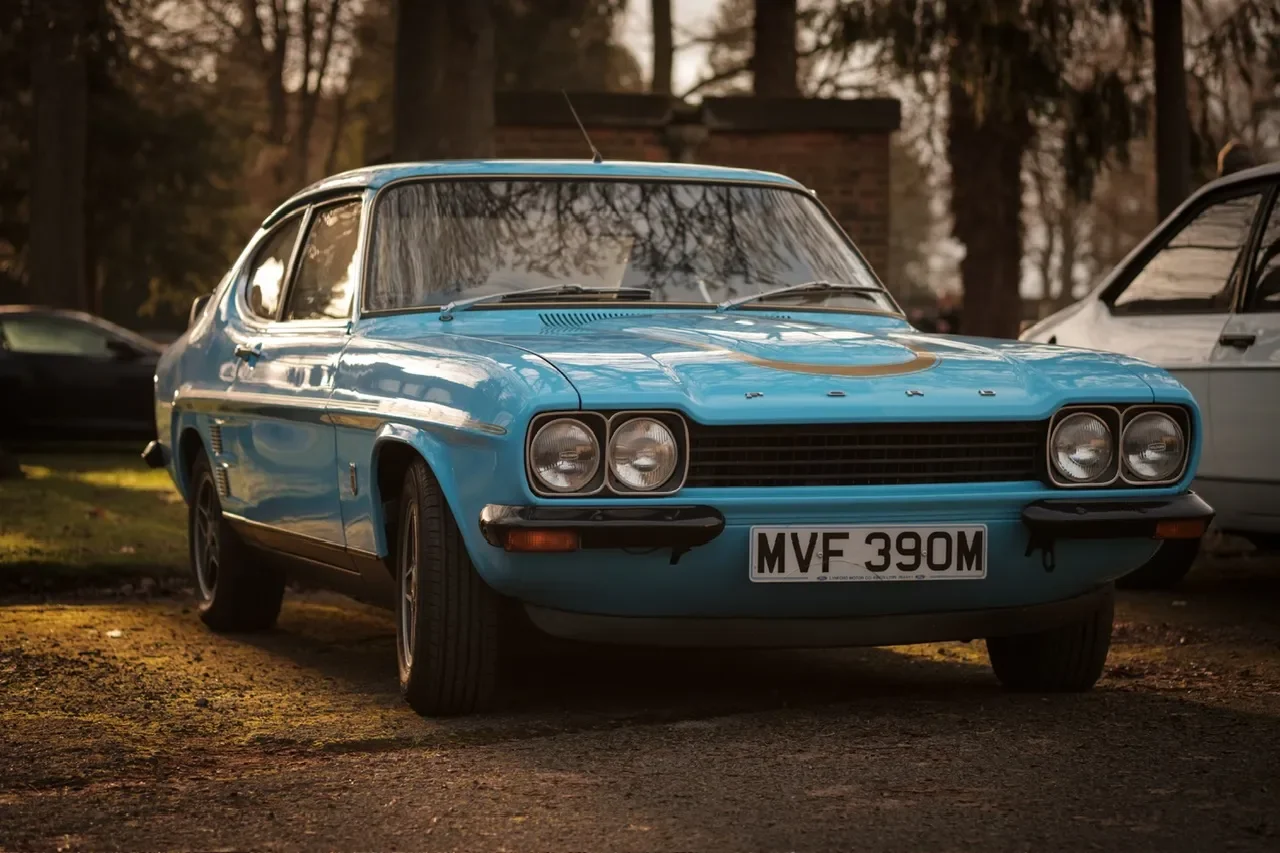
Blue Ford Capri car by Oli Woodman, Unsplash.
So, what do you think?
Do your kids have interests different to yours? How do you help them? Any tips? Have you ever adopted a passion that originally belonged to your child?