Sharing Some Thoughts on Learning to Read
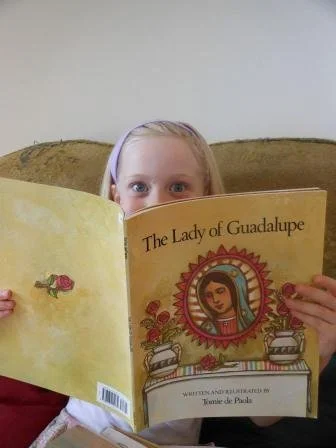
I was asked to share some thoughts on learning to read and write. Shall I start with reading?
When I created this blog, Gemma-Rose was almost a fluent reader so I haven’t written many stories on this topic. I will try to think back to how she did acquire these skills. Did I teach her to read, or did she learn to read by herself?
A common question people ask about reading is… “Can a parent teach an unschooling child to read or should she be left to pick it up by herself?” It’s rather a frightening thought to stand back and leave a child entirely alone, to learn such a complex skill, isn’t it? And I don’t think it is necessarily the right thing to do. Unschooling doesn’t mean we can’t help our kids.
“Mum, I’d like to learn to read. Can you teach me?”
“I’m sorry, we’re unschoolers. You’ll need to work it out for yourself.”
It sounds silly, doesn’t it?
I guess the key is knowing when a child wants to read and so is ready to learn. Then we can offer to help them. What do you think?
All my children wanted to learn to read. But they didn’t all learn to read at exactly the same age. Perhaps most of us get anxious to some extent if the ‘right’ age approaches and then passes, and our children aren’t reading fluently. I know I had some worries even though none of my children were very late readers.
I’ve made my fair share of mistakes. I’ve persisted trying to teach a child when they were obviously not ready and didn’t show the necessary interest. I’ve turned reading into a battle. I’ve worried about what other people might say. I’ve felt under pressure. Even with Gemma-Rose, I had times when I wasn't very relaxed. But it all started well.
We tried an online reading course, but it was only in the developmental stages, and Gemma-Rose soon ran out of lessons. To be honest, the avatars were more interesting than the reading lessons. I've just remembered what she did learn: mouse control!
Children want to learn to read so they can read books. It sounds obvious, but sometimes I'm sure it doesn't seem that way to a child. A lot of workbooks and exercises have to be completed before a book can be read. And then the initial books seem so contrived and boring. Gemma-Rose wanted to read real books. So I spent some time most days reading with her, just short periods of time.
Gemma-Rose chose the books we read together: delightful and enjoyable picture books. She also loved Dr Seuss, which I love too. I didn’t worry about whether a book was too difficult or not. We’d read books together, with me filling in the words Gemma-Rose didn’t know. I didn’t insist she sound out every word. I‘d give her the words freely.
I remember saying to some of my older children, “You must know that word. I’ve told you what it says a dozen times. Just remember!”
I feel rather sad when I recall those words. If they knew the word, I’m sure they would have told me. Why wouldn't they? I didn’t trust them at all.
I would point out to Gemma-Rose how letters work together to produce certain sounds, but I didn’t make a big thing about it. Sometimes I’d write down words in an exercise book to illustrate what I was teaching her. Sometimes I’d forget the lessons I’d learnt, and I’d ask Gemma-Rose to write the words for me, and made reading into a chore. That was always a mistake. She’d close up, and scowl, and I could see she didn’t want to do that. When teaching becomes a battle, I find that not much progress is made.
Gemma-Rose was doing well. Her reading was good, but I did wonder if she'd ever get to be a fluent independent reader. That stage seemed to be taking its time arriving. Reading seemed so slow going to me, even painful at times. Sometimes I'd bring a reading session to an end early, or finish the book for her. I think Gemma-Rose was happy enough, but I became a bit impatient with the whole process.
In the end, I stopped actively teaching her. I don't really know if it was because I became busy with other things or whether it was because I was becoming frustrated. It could even have been because I knew Gemma-Rose wasn't quite ready to move on. To my surprise, one day she offered to read me a book. She was a fluent reader. She'd learnt in her own time.
I’ve (unfortunately) remembered something else I sometimes said to a certain child: “When are you ever going to read? What’s wrong with you?” That must have been so disheartening for the child. It wasn’t good for me either. I used to get so hot and bothered.
I do believe all children will eventually learn to read in their own time. But I think a couple of my children wanted to read, but they found it hard to learn. I considered a little extra help to be appropriate. Though before offering any, I might have considered if it was my child that wanted the extra help, or whether I felt compelled to push him along, regardless of whether that help was wanted. I think it was a bit of both. It all worked out anyway. I wrote this post:
A Little Unobtrusive Help with Reading
Well as you can see, I am a slow learner but I finally got there with Gemma-Rose. It’s just as well I had so many children! I actually wrote a
post called…
Maybe I would sum up learning to read this way:
It’s okay to teach a child to read
But a child needs to be ready to read and want to learn (otherwise, it’s frustrating for everyone, and a waste of time, and it damages relationships)
The ‘right’ age to read is different for different children
A child’s readiness to read must be respected
A method has to take in the needs of the child. There are lots of different options and some suit certain children more than others
A structured course isn’t essential
Learning to read by reading real books is good
Maybe some children find reading more difficult than others,and extra help might be needed
But then again, some children just might need more time
Offering help when a child needs it, and not withholding it, until a mother feels the child needs it, works best. (Here, I am thinking about choosing to tell a child what a word says, instead of insisting they sound it out every time)
Children will learn to read in their own time, and not a mother's
Sometimes lots of time is needed (or what feels like lots of time)
It doesn’t help when we become frustrated and angry and impatient (Perhaps I am the only person who has experienced this!)
Children who learn to read at a-later-than-average age, catch up quickly
It's impossible to tell which of my children were early readers and which weren't
A few of my children learnt to read so easily, I didn't really have to do much. But a couple of them... I made plenty of mistakes. I think Gemma-Rose is glad she is the last child. She has benefited from all that experience.
These are only my thoughts, based on my experience teaching my seven children to read. Maybe you will come to different conclusions through your own experiences. I am the first to admit I am not a reading expert. I am certainly not an unschooling reading expert.
Would a child learn to read entirely on her own? I have no idea. I hope that's not the question you wanted answered! I did try a few things when teaching my children to read, but not that.
Talking about reading has taken up so much time, there's none left for sharing ideas about writing skills. If you are interested...next time!