Should people who use AI feel ashamed? Should I feel that way?
While researching AI, I found a commenter saying authors who use AI to promote their work should be ashamed of themselves.
Why?
Did the commenter think those authors were hypocritical? They would probably complain if someone quickly and without much effort produces an AI book that competes with theirs. But they’re happy to steal work opportunities from other creators when promoting their work.
I’ve promoted my books and other writings using AI. Lots of people do this. Anyone who uses social media platforms such as Instagram to let others know about their work uses AI in some way.
I generated the illustrations for my Angels novels using AI. I don’t believe I was taking a job away from an artist because I couldn’t afford to pay for one. AI allowed me to share my stories, which I wrote without any AI help, in the form of books. But maybe some people think it’s the principle that matters. If I couldn’t afford a human artist, then perhaps I should have published my books without illustrations.
We might decide not to use AI, but can we avoid it altogether? There’s a good chance most people use AI, and they probably don’t even realise it.
AI is everywhere, even in ways most people don’t notice. From the moment you wake up to the time you sleep, AI works in the background, shaping what you see, hear, and do. It’s in your smartphone, car, emails, and even the weather forecast you check each morning.
From 15 Non-Obvious AI Examples In Your Daily Life
Is it okay to use AI in these ways? Could it be acceptable to use AI to check the weather forecast, plot our route when travelling, and make viewing suggestions when we sign into a direct streaming movie site? But should we not use AI to help us with our creative work? What about non-creative tasks associated with our work? Can we ask AI to brainstorm ideas when we hit a plot problem? Or should we only ask real people for their suggestions? Can we use AI to check our spelling and grammar?
I’m the sole author of my stories. Everything I write originates in my mind. Hold on, that’s not quite true. Of course, I import many external ideas into my mind by reading books and websites, watching videos, looking at art, listening to music, experiencing life and talking with people, before I produce anything of my own. Everyone does. We all dip into the communal pool of thoughts and ideas, and combine them uniquely. We add a sparkle to our work that belongs to us alone. AI can’t produce anything magical. It can’t cause us to whisper with wonder and delight, “How did I write those words? Where did they come from?”
I’ve always been interested in finding new ways to present the same information. Based on my work, I’ve written books and blog posts, recorded podcasts, made videos, created a community, and joined Zoom discussions. I’ve found multiple ways of offering information, recognising that different methods appeal to different people.
Recently, I discovered a new way of sharing my work: AI podcast generators. I tried out a couple of them.
As you might know, I shared several of these podcast videos here on my blog. A few people took the time to give me some feedback about this new project.
Sadly, the AI podcast host voices weren’t popular. Readers prefer my voice, which I guess is a compliment.
I received another comment, which was thought-provoking:
The question that comes to mind is: Why should I take the time to listen to something that no one has taken the time to think up and record?
My first reaction was to feel shame. How could I cheat by posting podcasts that weren’t my work? But I quickly realised that they were my work.
The AI podcast generators need feeding before they can produce audio. We have to give them a source, something to work with. I gave the generator words that I’d written: my stories.
Having generated a podcast based on a story, I created a video to go with it. I didn’t just say, “AI, make me a video to go with this audio.” I did everything myself. Of course, video-creating apps use AI. But again, they also need feeding. And though there are such things as templates, I didn’t use one. I had my own ideas about what I wanted my videos to look like.
My work was at the heart of each podcast. I was just presenting it in a new way, one that might not appeal to some people, but that’s okay.
Of course, not everyone uses AI in conjunction with a creation that belongs to them alone. Some people try to get AI to do all the work. Yesterday, chatting with my author daughter, I discovered that someone has generated a huge number of AI novels to sell. Apparently, genuine authors on social media are talking about this. (It’s strange how these conversations about AI are taking place on a platform run by AI, though many people might not realise that.) I’d like to know more about these AI novels. Did the ‘author’ edit AI’s words? Did they add their own ideas? I’d be interested in reading some book reviews. Do they pass the test? Or are they just a rehash of other people’s ideas and lack any magic of their own?
So, what do we do to protect creators? Refuse to use AI? Or is it too late to do that? Is AI here to stay? Will we get left behind if we close our eyes to its possibilities? Perhaps we need to develop new systems and ways of working to ensure AI is a positive experience for all of us. I don’t know what the answers might be, but I’m sure a creative human mind will eventually solve the problems.
A few days ago, I posted my AI-generated podcasts on a new Instagram account because I wanted to share my AI experiments. A day later, I deleted the account after realising I don’t want to get caught up again with the algorithm, focusing on likes and followers. I don’t want AI to influence my life in that way, like it did once before.
We can choose how we use AI. We can say no to attempts to use it to negatively dictate our lives. If we want, we can use it to further our work. Perhaps we can even use it to cheat.
Yesterday, as an experiment, I asked AI for some help:
Suggest ideas to reflect upon while praying the third luminous mystery of the Rosary.
ChatGPT generated these points:
“The Kingdom of God is at hand”: Jesus invites you to see God’s reign breaking into your life right now.
Call to Conversion: Repentance is not just sorrow for sin but turning your whole heart back toward God.
Healing and Mercy: Jesus cures the sick, forgives sins, and restores the broken—He does the same for you today.
Parables of the Kingdom: The Kingdom grows like a seed—quietly, mysteriously, yet powerfully in hidden places of your heart.
God’s Mercy Outruns Sin: The prodigal son, the lost sheep, the forgiven sinner—Jesus reveals the Father’s joy in welcoming us home.
Discipleship: To follow Christ is to embrace His teachings and live the Beatitudes.
Justice and Love: The Kingdom calls us to care for the poor, the lonely, the marginalized.
Trust in God’s Timing: The Kingdom comes gradually, not all at once—patience and faith are needed.
Witness: Proclaiming the Kingdom is not only words but the witness of your life.
Hope in Eternity: The Kingdom points us beyond this world, to life forever with God.
These ten points look perfect for adding to my Rosary graphics. But can I trust AI? What if it’s presenting me with errors? Although AI sounds like an expert who’s talking from experience, it doesn’t really know anything about the faith. It’s not a spiritual director. But even though we can’t rely on AI, I used these meditation ideas. From my knowledge of the faith, they seem okay.
Maybe that’s the whole point. We can’t stop thinking, naively handing everything over to AI, trusting it to do all the work for us. It’s not human. It’s a tool. We need to stay in charge.
AI can check our writing for errors, ensure we get to our destination without getting lost, and give us an idea, which is probably wrong, about the expected weather conditions. If we aren’t concerned about wasting our time, we can let it dictate how we spend our days. And it can also help us pray.
I’m praying the Rosary – real prayer helped by AI, which can’t pray but has some useful suggestions for Rosary reflections.
AI is a tough topic, isn’t it? There are so many issues to consider. Maybe my opinions will change over time with more reading, thought, experience, and knowledge. But for now, I’m not ashamed to say I’m exploring AI, looking for new ways it can help me do the work I feel called to do.
PS: I used AI to check the grammar and spelling of this article. (I accepted some of the suggestions and rejected others.) Strangely, it wanted to change the reflection section I copied from ChatGPT. AI checked and wanted to correct AI. Is that something worth pondering?
Images
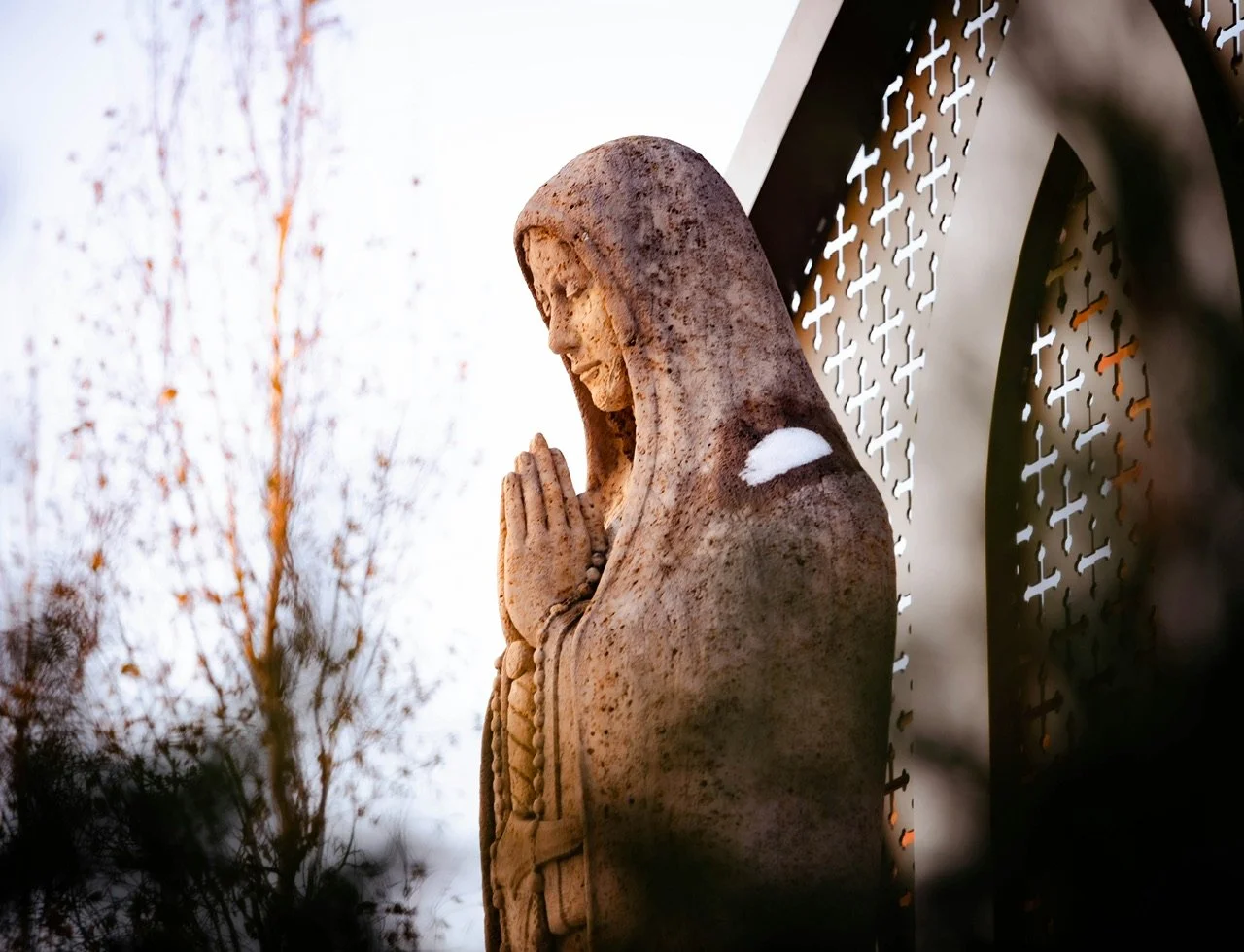
1. The featured image was taken by a generous real person, Gianna B, Unsplash.
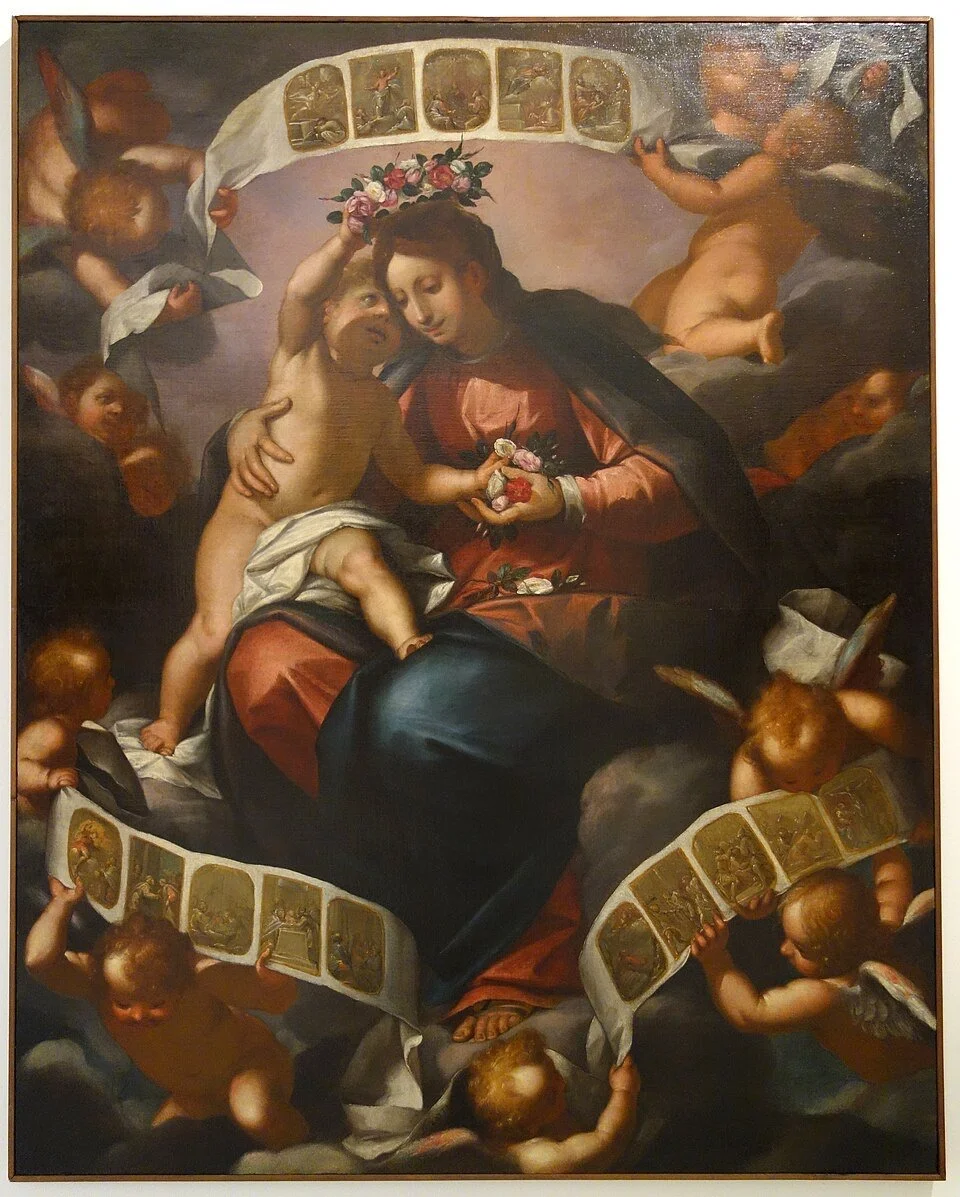
2. Madonna of the Rosary by Giovanni Battista Paggi
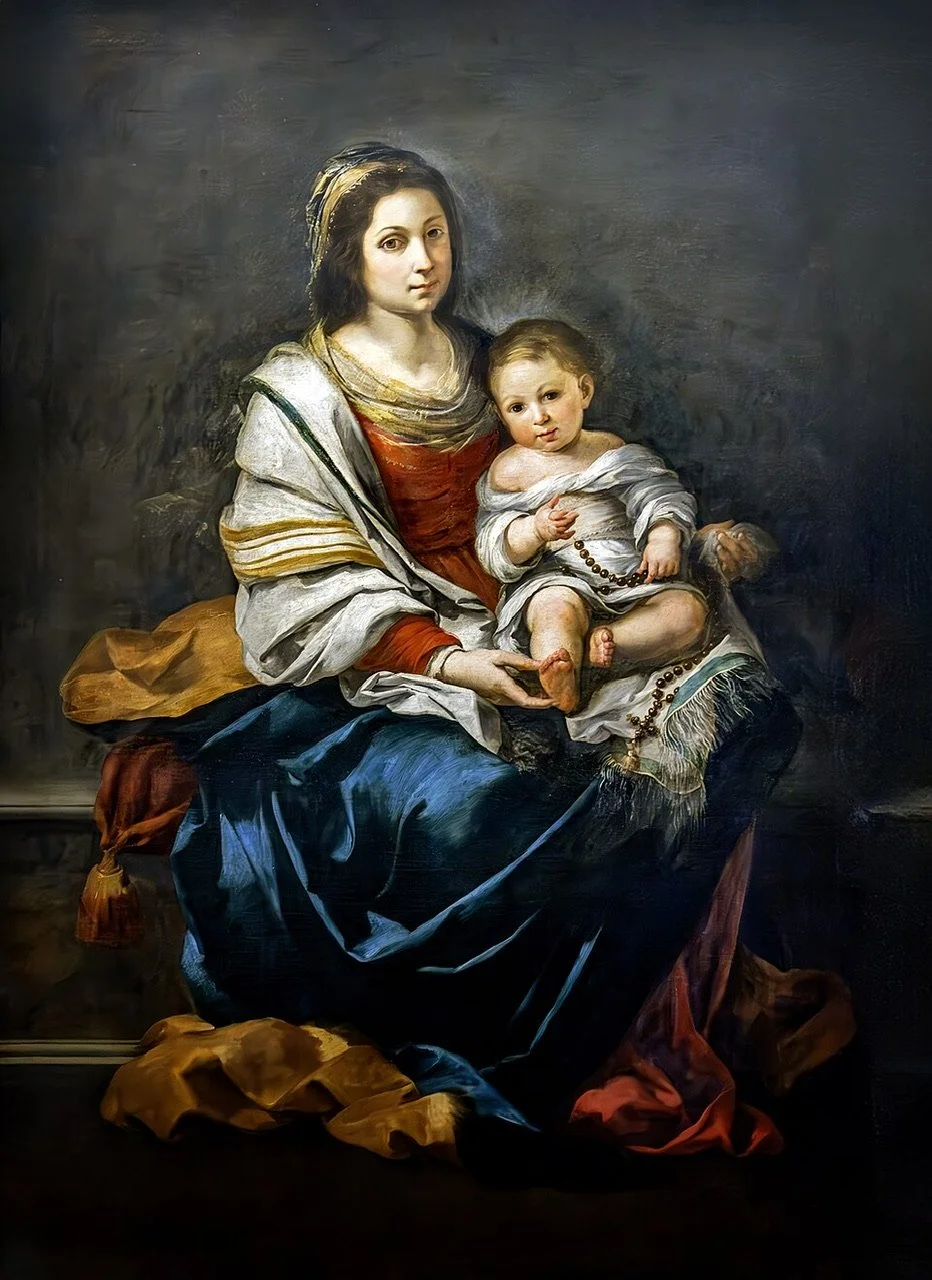
3. Our Lady of the Rosary by Bartolomé Esteban Murillo