Doing Nothing?
Many years ago, when my first child Felicity was five, we went to our first homeschooling conference. Our speaker was Jill, an experienced unschooling mum and she was pure enthusiasm. She walked around and around the room talking at speed, flinging her arms this way and that in emphasis. Jill told us how children are eager to learn; they love learning; they don’t need to be taught. A parent’s role is not to be a teacher but a facilitator. She illustrated her point with an example from her own family.
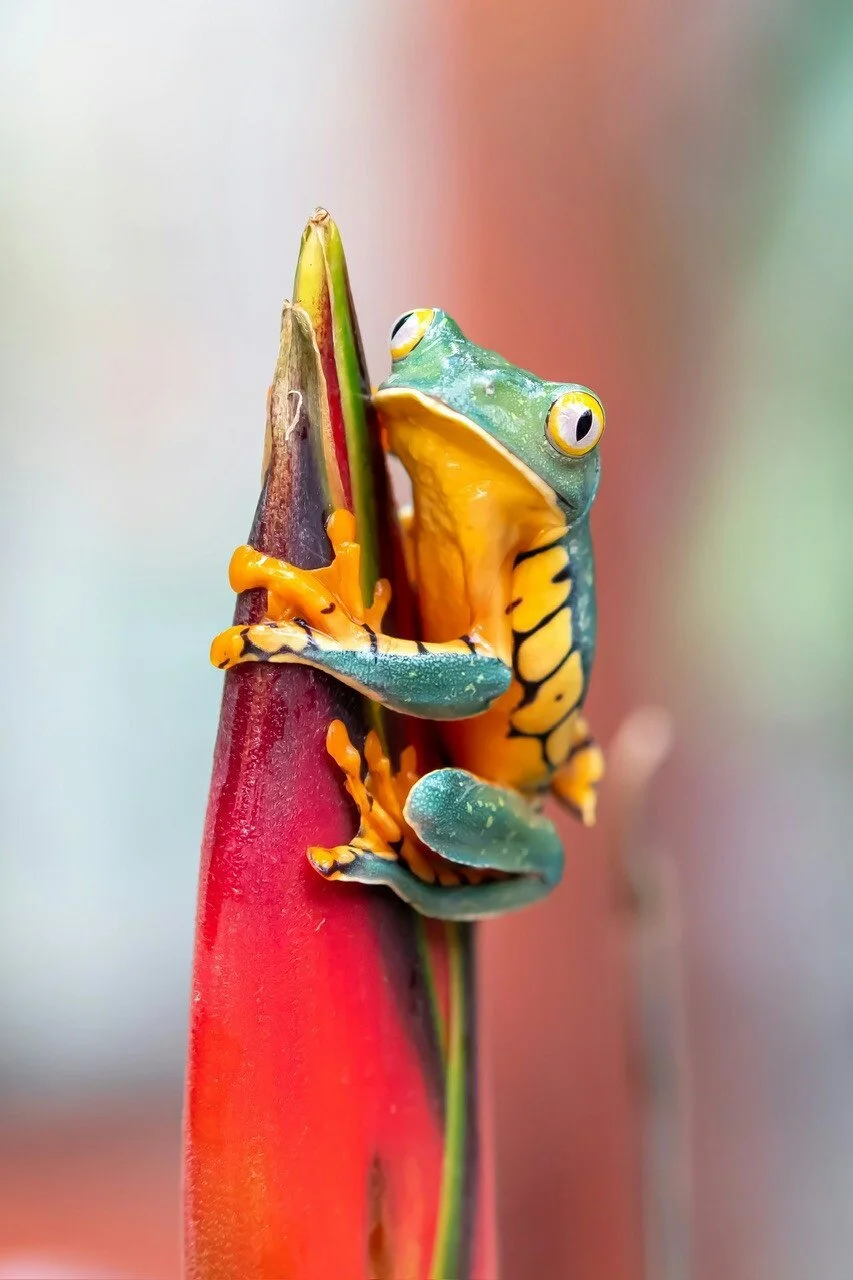
“One of my children loves frogs, so I took her to a talk at the museum. The speaker was an international expert in the frog field. He was passionate about his subject. My daughter came home. She borrowed every library book about frogs she could find. She wrote, and she drew. She covered the walls with pictures of every kind of frog. So many frogs. I didn’t know that many existed. Wow! She’s now a frog expert. She knows far more than me, far more than most adults, and all I did was drive her to the talk.”
I soaked it all up. I went home dreaming. Would my children be frog experts? What projects would cover our tables? Perhaps there’d be hundreds of different butterflies adorning our walls. It didn’t matter what Felicity took an interest in. I was sure she’d be an expert at something.
I waited. And I waited. I waited some more. Felicity didn’t seem inclined to research anything. She didn’t ask me to take her anywhere. She didn’t draw dozens of pictures of frogs or butterflies or anything else. She didn’t set up any experiments. In fact, she seemed inclined to do nothing interesting at all. She didn’t appear to know what she wanted to learn about. How could I be a facilitator if she didn’t let me know what she was passionate about? I didn’t understand how unschooling could possibly work. Perhaps my children weren’t of the right personality type. Perhaps Felicity was the sort of child that had to be pushed to do anything.
Looking back, I can see that I missed something important: Children need a rich environment in order to learn. We need to be actively involved with them. We can’t just step back and leave them to learn entirely on their own.
When my children were babies, I read a lot of parenting books, and so I knew all the latest ideas and research. I discovered I had to provide a stimulating environment to maximise my child’s development. So I drew human faces and hung them where my babies could see them. I sat each baby in a chair in front of a frame. Every day I searched the house for new and interesting things to tie to that frame, things that they could touch and suck and feel: soft socks, cold spoons, a bristly toothbrush, a long ribbon. I took my babies swimming, sat them in the sandpit, sang to them, read to them in an animated voice, showed them bright pictures, danced with them, played peekaboo and a dozen other games, told them the names of everything we saw, carried them around and included them in the real world.
And then when they got to the age of five, I thought it was all up to them. I stopped providing new experiences for my children. I no longer looked for ways to enrich their environments. Perhaps that was my mistake.
Eventually, I decided that I had to help Felicity find a few interests, so I enrolled her in a few different lessons, and she experienced swimming, gymnastics, physical education, music, and Brownies. Maybe I went overboard a bit at first. I don’t know if she really needed all these different classes. However, she discovered a lot of things she had no interest in whatsoever, and a few things, such as music, that she loved.
I took Felicity to the library, and we borrowed dozens of books, both her choices and my suggestions, and we read together. And soon she wanted to learn to read.
Occasionally, I organised an outing to a museum, the beach, the bush, to friends’ houses, the shopping centre, or the park.
I made sure we had a good supply of art and craft materials. Sometimes we tried a specific craft project, but mostly Felicity experimented with all the supplies. She drew fairy after fairy after fairy and then, for a change, she decided to paint fairies instead. She made covers for the little books she enjoyed creating. And she wrote little stories (about fairies).
Besides the childhood music education lessons, I bought a range of CDs, and we listened to music and danced and sang.
Felicity wanted to write. She made up poems, told stories, wrote letters. And I didn’t worry about the spelling.
She spent lots of time playing.
And we talked. We talked about anything and everything.
Sometimes it looked like I was ‘steering’ Felicity’s education by pointing her in directions she hadn’t realised existed, but she was, at the same time, discovering passions of her own. Our walls did not fill up with pictures of frogs or butterflies or anything else, but soon we had dozens of books filled with poems and stories. We had a daughter who loved music and reading and who asked questions about everything and was eager to learn.
There was only one problem. Because I was exposing my daughter to all kinds of experiences, I thought we’d left unschooling behind. Don’t unschooling parents have to step back and not influence a child’s learning? Of course, I didn’t understand unschooling very well. What I was doing was just what I should have been doing. I was strewing.
I found this little article Felicity wrote for a homeschooling newsletter when she was nine:
Hi, my name is Felicity Kate Elvis, and I am 9 years old. I have two brothers, Duncan (7) and Callum (4) and a baby sister Imogen (1 ½). I have always learnt at home. I would like to tell you about how we home school in our family.
One reason we home school is that we think learning should be fun. We also like spending time with each other and being able to learn in our own way.
Mum doesn’t make any plans for each day. We don’t have a timetable. We just have a fresh new day to fill with reading, writing, learning and doing.
I usually start the day by writing a poem because all our thoughts are fresh in our heads when we get up. When Imogen wakes up, I do my clarinet practice. Then we do our maths because Mum thinks it’s important. We spend the rest of the day learning whatever we want like drawing, writing, reading, doing experiments, and making things.
I especially like reading. In the evenings, Daddy reads us a few chapters of a book. Dad makes different voices for each character and brings the story alive.
I do lots of cooking, and Dad’s a great cook. Mum is good at handicrafts and sewing, and she shares all these skills with us.
There is still plenty of time left each day to play, watch TV, visit friends and do whatever else we want to do.
We love homeschooling!!!!
Note: My children no longer learn maths “because Mum thinks it’s important.” Instead, I look for resources that might capture my children’s interest in this subject. They learn maths because they have a need or a desire to learn, rather than because I insist. Unschooling is a continual learning experience for me as well as for my kids!