Having the Confidence to Ignore the Opinions of Others
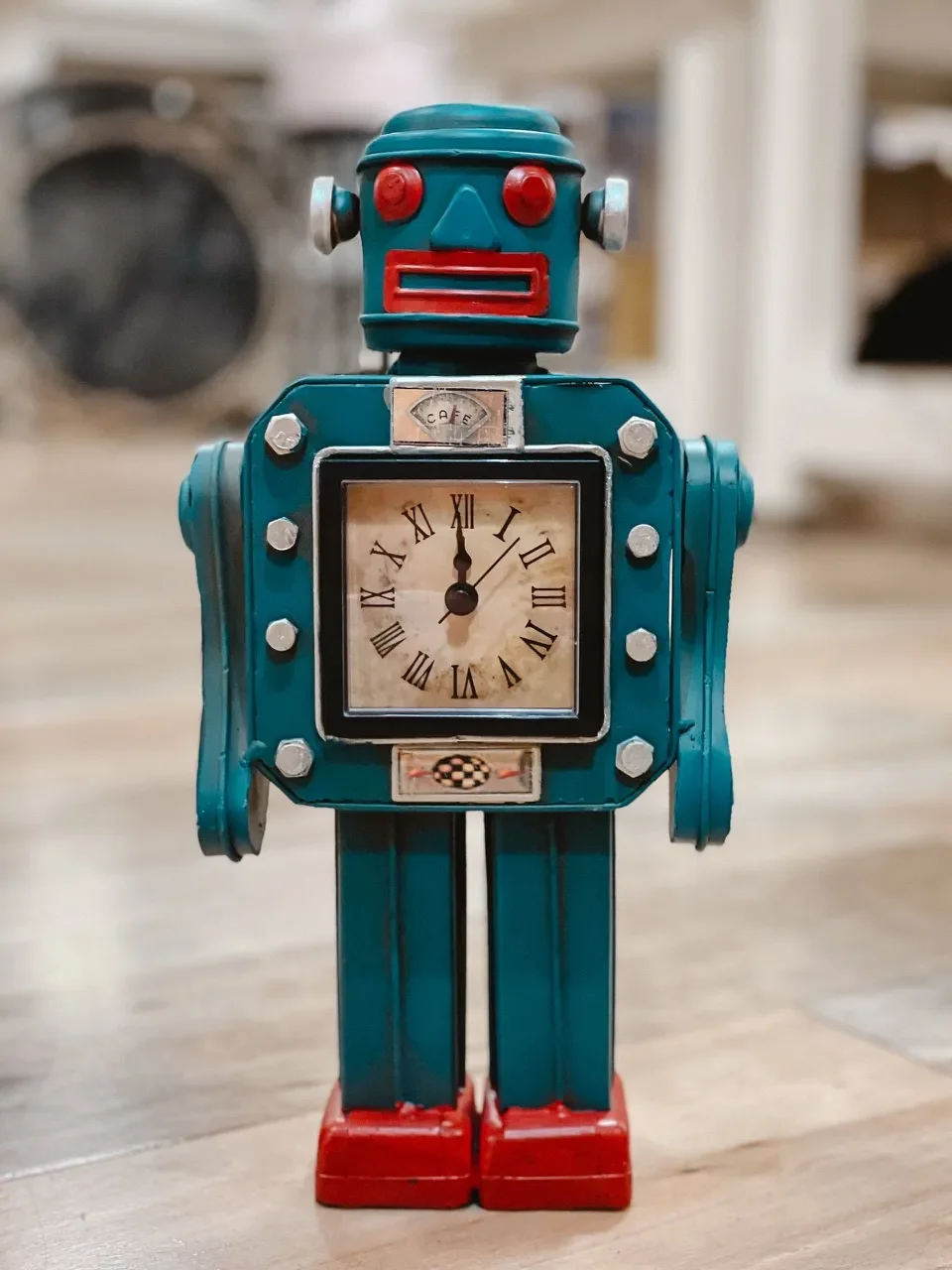
Gemma-Rose is eight years old, and she still can’t tell the time. Well, that’s not quite true. If I put my watch in front of her and say, “What’s the time?” she’ll screw up her face and look unhappy for a while, and then eventually she’ll give me the correct answer. But her calculating will be accompanied by a lot of huffing and puffing, and the answer won’t arrive instantly.Now this situation might shock some people. Can’t all school kids of her age use an analogue watch? Perhaps it confirms some people’s negative opinion of homeschooling or unschooling in particular.
I remember an interview I once watched on TV. A current affairs reporter, Matthew, was interviewing a homeschooling family. Both parents, together with their ten-year-old daughter, were in the studio. It must have been quite some time ago when homeschooling wasn’t so widespread because this interview was still considered newsworthy enough to be shown on a prime time current affairs show.
It was obvious from the very first question that Matthew was anti-homeschooling.
“So you’re teaching your daughter yourselves. And how is it going? Is she learning?” Without pausing for answers, he fired the next question at the daughter: “What’s 8 x 9?”
The girl barely had time to think, and no time to answer, before another problem came hurtling towards her.
“So your daughter doesn’t know what 8 x 9 is, or how to add up a few simple numbers. Doesn’t that worry you? Don’t you think you’re disadvantaging her by taking her away from good schools?”
The parents tried to defend themselves and explain their educational philosophy, but the interviewer kept cutting into their answers. All he seemed to want to do was prove that homeschooling is a ridiculous idea. It doesn’t work. Any parents who remove their children from school are being selfish and irresponsible. And he based his opinion on the girl’s inability to answer what he considered to be a few straightforward maths problems.
I think of that girl sitting under the studio lights with cameras pointing at her, listening to the questions of an aggressive stranger. Is it any wonder she couldn’t come up with the right answers? And even if she didn’t know what 8 x 9 is, does that prove homeschooling doesn’t result in learning, that it’s a failure? Probably she knew a great deal about other things, things the interviewer didn’t think (or want) to question her about.
But back to Gemma-Rose. She can write a novel. She can read Shakespeare and discuss a play intelligently. She can discuss history with her siblings. She reads book after book after book. She knows how to work out her times tables even if she can’t recite them quickly. She is familiar with Gilbert and Sullivan, many ballets, lots of poems and paintings and pieces of classical music. She has excellent computer skills. She can make an animated movie and design a computer game. She draws and plays the piano and sings and runs like the wind. I could go on and on. Does it really matter that she can’t tell the time?
Can’t tell the time?
“Gemma-Rose, can you tell the time?” I ask her.
“Of course I can,” she replies rather indignantly.
“What do you use to tell the time?”
“My computer.”
Gemma-Rose tells the time using the digital clock on her computer. And now I realise something. She doesn’t use her analogue watch. It seems to have disappeared into our home’s black hole. We don’t have an analogue clock on the wall. Everything in our house is digital. Gemma-Rose doesn’t need to know analogue time. She has no use for it. She remembers the principles that I explained to her a while ago, but she has never had a chance to practise them.
So what do I do?
I could find some online interactive activities involving analogue time for her to play with.
I could buy an analogue clock and put it on the kitchen wall where she’ll see it every day. I’m sure she’ll soon start to look at it and wonder and work things out for herself.
Or I could do nothing. She’ll learn analogue time properly one day if she ever finds she needs it.
I think if I choose the last option, I will warn her: “Gemma-Rose, please do not go anywhere near a TV or newspaper reporter. Refuse to answer any questions.”
I think of those poor bewildered parents who were interviewed on TV, and I remember how angry I felt. They were two people doing their best for their child, and they were portrayed as fools. Did their confidence take a battering that day? Did their trust in their daughter’s ability to learn evaporate because of the aggressive opinion of a stranger? I hope not. Other people’s words and opinions shouldn’t have so much power over us. But we are human.
My daughter Gemma-Rose who is eight years old (going on nine) still hasn’t conquered analogue time. I am announcing it to the world. Will anyone judge unschooling on that statement? Will they compare my daughter’s abilities with those of other children? Or will they think, like me, “She will learn everything she needs to know when she needs to know it”?
Yes, I have confidence in my children’s ability to learn. And I think Gemma-Rose is doing just fine.