My Old Portmanteau

This morning, as we drove along the back road that leads into town, we saw three children waiting for the school bus. One of them was sitting down reading a book. I thought at first he was sitting on his school bag, but he wasn’t. He was sitting on a rock.
“I don’t suppose modern school bags are much good for sitting on,” I remarked to the girls. “They’re not like my old port.”
Port?
“When I was a girl living in Queensland, all the school kids had small suitcases called ports.”
Yes, ports were great for sitting on: portable seats. We could stand on them too. We could even carry things in them.

Inside my port was my yellow plastic (slightly mouldy) raincoat which glued itself to my body every time I wore it in the muggy tropical rain.
My port also held my plastic drink bottle with a screw-on lid and matching cup. My mother would fill this bottle with cordial and pop it into the freezer overnight. Even on the hottest of Queensland days, I always had a cold drink for my lunch.
I also had a wooden pencil case with a top that slid to one side, along grooves.
Yes, ports were good for carrying everything… except books. Books were far too heavy. Ports stuffed with books made our arms drop off. Unless the handles dropped off first.
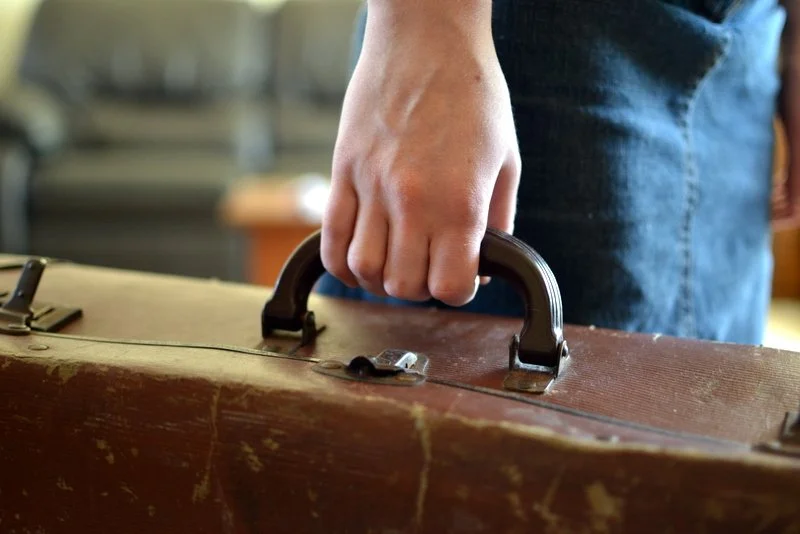
Ports went out of fashion a long time ago: banned, a health risk for children. Who wants to end up with only one arm, or one arm longer than the other? Ports are no longer found in schools. Instead they can be found on display in museums. There’s one in the Powerhouse Museum in Sydney, though it’s not described as a port. It’s been labelled a suitcase. Could port be a Queensland word? No, apparently not. I’ve just heard a New South Wales friend owned a port as well.
I always find it disconcerting when I see items I’ve used as a child in a museum.
“Look, girls! I had one of those as a child.”
“You did?” The girls look at me with new eyes. Museums are full of old stuff. Suddenly I feel old too.
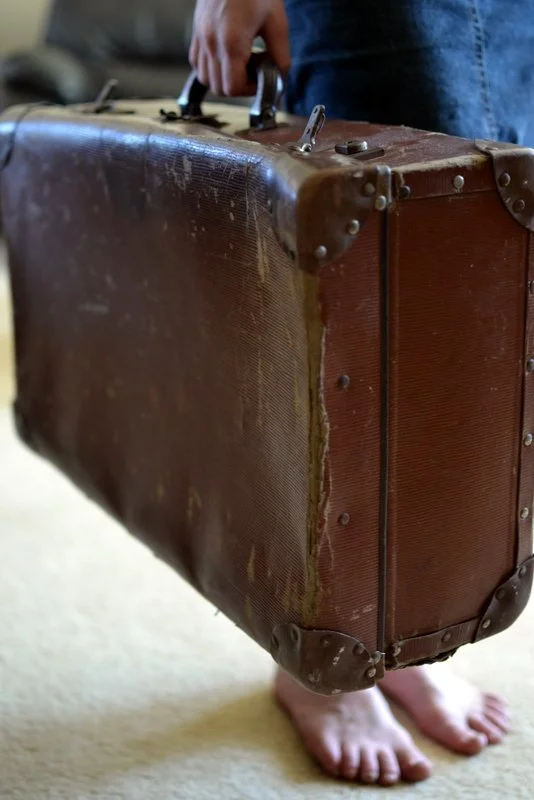
PS: Where does the word port come from? I found this on Wikipedia:
A portmanteau is a piece of luggage, usually made of leather and opening into two equal parts. Some were large, upright, and hinged at the back and enabled hanging up clothes in one half,[1] while others are much smaller bags (such as Gladstone bags) with two equally sized compartments.[2] The word comes from the French word portemanteau (from porter meaning “to carry” and manteau meaning “coat”),[3][4] which nowadays means a coat rack but was in the past also used to refer to a traveling case or bag for clothes.
Port… portmanteau… A piece of luggage intended to carry my raincoat. Now I know. And so do you!
I wonder if you remember what kind of school bag you had as a child. Perhaps you had a portmanteau too!