Unschooling: A Slow but Productive Way of Life
My beautician and I have thought-provoking conversations. Yesterday, while Bonnie was taming and tinting my ageing eyebrows, making them look fierce, we chatted about time.
We started with photography and how phones have simplified the process of capturing images. After buying an iPhone 15 Pro Max—I saved up for it for weeks—I no longer drag my DSLR camera around with me. If I see something I want to photograph, I just reach into my pocket for my phone. It’s convenient and quick. I can zoom in or out, taking wide-angle pictures or right-under-my-nose shots. Best of all, despite the lack of effort, my photos are always beautifully sharp.
“DSLR photography is slower than phone photography,” I told Bonnie. She raised an expertly shaped eyebrow, not really understanding what I meant, so I explained:
Before taking my first photo with my DSLR camera, I need to choose the most appropriate lens and attach it to my camera body. Then, I must select the best ISO, aperture and shutter speed settings for the subject and conditions. When the camera is ready, I press the shutter, look at the captured photo on the screen and maybe adjust a setting or two. I take my time.
Of course, I sometimes miss a shot if I’m not ready when a greedy bird lands on the picnic table in front of me, hoping to feast on the leftover crumbs, or my daughter suddenly bursts into giggles, or my husband’s face screws up with dislike after realising the milk is sour. But is that a problem? Is capturing every possible moment with a picture important?
I used to go on photography outings with my daughter Sophie. With cameras around our necks, we’d amble through the bush or park, or along a street, occasionally stopping to take a photo while discussing camera angles and settings. We’d experiment, compare notes, and look at each other’s photos. We’d go slow, extracting as much joy as possible from each moment, enjoying each other’s company and the scenery before us.
Yesterday, I had a second slow conversation. I moaned to my husband about my slow website: “It takes forever to change a page. Who will wait around on my blog while a new post loads? No one.”
We’ve become very impatient, haven’t we? If a webpage doesn’t load instantly, we give up and go somewhere else. We don’t even wonder whether what we want to view is worth the wait. We’ve moved on from the early dial-up days when we didn’t mind the slow speed of the Internet. We’d sit glued to our screens, waiting for each page to appear or each video to load with a sense of awe and wonder.
So, yesterday, I had a problem: my website was slow to load. I knew I should do something to fix the speed, but I didn’t want to.
“It would be much easier to delete my blog or make it private,” I told Andy. “I’m fed up of maintaining it.”
But I didn’t hit ‘delete’. Instead, I researched web-optimising plugins. And then, despite my reluctance to sink any more money into my site, I bought one that, hopefully, will give my web pages a push and force them to move faster. I can’t have the slowest unschooling website on the Internet, can I? That would kill the last bit of interest people have in my blog. Things have to be quick.
Or do they?
There’s value in taking time to read an article properly while pondering it, isn’t there, instead of flipping quickly to the next one? It’s good to slow down.
Not so long ago, I read a book by Cal Newport called Slow Productivity:
Hustle culture. Burnout. Quiet quitting. Today we’re either sacrificing ourselves on the altar of success or we’re rejecting the idea of ambition entirely. But it doesn’t have to be all or nothing. There is a way to create meaningful work as part of a balanced life, and it’s called ‘slow productivity’.
Coined by Cal Newport, the bestselling author of Deep Work and Digital Minimalism, slow productivity is a revolutionary philosophy based on simple principles. From managing your energy according to the season, to identifying which projects to pursue and which to set aside, to building a schedule that yields maximum output with minimum stress, this timely and essential book will revolutionise how you work, helping you to accomplish great things at a more humane pace.
Parents can also accomplish great things at a more humane pace. Instead of racing through each day, trying to achieve as much as possible, we could slow down and focus on what matters the most: the kids in front of us. We could fix our eyes on them, listen carefully, and give them what they need in the present moment instead of living at a hectic, cram-it-all-in pace for a future that could but might not be.
Arriving home from my appointment at the beauty salon with my fierce, rejuvenated eyebrows, I was still thinking about my DSLR camera. You know what? I’m going to dust it down, sling it around my neck, and then amble down a bush track. I hope I see something I’d like to photograph. More importantly, I hope I remember how to use my camera.
So, what about you? Do you sometimes feel you’re running through your days at an uncomfortable pace? Do you yearn to slow down? And do you think unschooling is a slow but productive way of life?
More Eyebrow Stories
Here’s something a bit different: more eyebrow stories. Although it sounds strange, eyebrows can teach us a lot about unschooling.
… And we shouldn’t be afraid of taking risks: doing something different and trying new things. People might look at us strangely, but then again, they might not. They might think what we’re doing is great.
It’s strange how many of us tend to stick to the same way of doing things, isn’t it? We want to blend in, stay under the radar and not stick out. Unschooling can be a bit that way. When my kids were growing up, we didn’t know any other unschoolers, so we tried to blend in with everyone else so we felt accepted. And we did okay until people engaged us in conversation. Then, our differences appeared. It became apparent we weren’t like everyone else. We were strange!…
Ordinary Frida Kahlo Eyebrow Days
Quinn barked, alerting me to the policeman striding along the path towards our house. After securing the dog, I opened the front door, my heart racing, my hands shaking, thinking, “The police only make house calls when they’ve bad news to share.” “Have you seen any strangers lurking recently?” the officer asked. “Your neighbour reported some broken windows.” My heart rate slowed as I realised the man was talking about windows and stones and not car accidents and deaths. I hadn’t seen anything or anyone unusual on our quiet road, so I couldn’t help the officer. He left, and I…
Photos
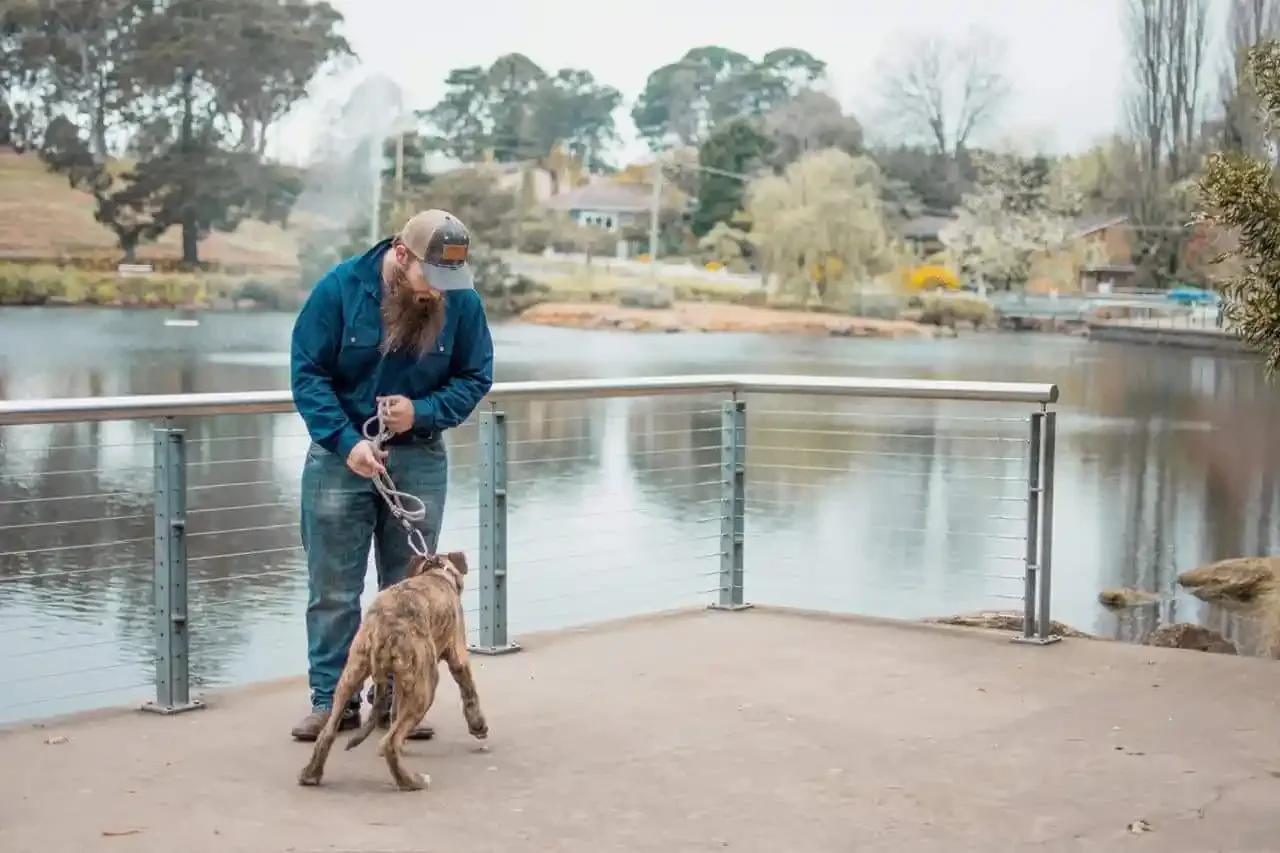
Back in time to 2020. Callum, his dog, Crash, and I ambled around the lake. My son didn’t mind waiting while I set up my camera to take a few photos.
If you have time, why not stop by and say hello?