When an Unschooler Isn’t Interested in Maths
What if our children moan and groan every time we mention the word ‘maths’? What if they say they hate it and can’t do it? What if they’re just not interested?
We could insist our children do some maths whether they like it or not. Basic maths skills are essential. What if someone finds out that our children don’t know such things as the times tables? Will they criticise us and our decision to unschool? Perhaps we feel we have to keep pushing our children even if we end up battling with them. And what about homeschool registration? We might need to prove our children are learning maths. If a child doesn’t do any, what are we going to write in the homeschool records book?
Or we could ignore these outside expectations, and maybe our own worries, and resist taking control of the situation. We could remind ourselves that our kids will learn all they need to know in their own time. All we have to do is surround them with a rich and interesting environment, and trust. They will get there when they’re ready.
I’ve been taking the latter approach with my youngest daughter Gemma-Rose (14). For some reason, she has always had a great aversion to the word ‘maths’. Just mention it and she closes up. I’m not sure how her dislike of maths came about. I did insist Gemma-Rose did some formal maths for a year or so when she was about 6 or 7. She hated the worksheets. She hated the ‘fun’ interactive activities. Most of all, she hated the timed exercises. Could this have affected her so deeply? It probably did.
Whatever the reason, Gemma-Rose has always had a problem with maths. Some people tell me that I should just sit her down and make her get on with it: Everyone has to do things they don’t want to do. She needs to realise this. Maths is essential. She’ll be at a disadvantage if you don’t insist she learns it. But it’s impossible to force kids to learn without their cooperation. Of course, I could have given her some incentive to learn by using rewards or punishments or shame. But I didn’t want to use these. That’s not the way to encourage real learning. I was also worried that the more I pushed, the stronger Gemma-Rose’s dislike for maths would become. I was hoping I could give her a new perspective on this subject.
I wondered if Gemma-Rose disliked maths because she had a false idea of what it is. Maths isn’t worksheets. It’s not having to remember the right answers in a certain amount of time. It’s not having a You Failed message flash on the screen when you don’t manage to do the required tasks. Instead, maths is a fascinating language that infiltrates every part of our world. For the past few years, my mission has been to strew maths, a bit here and there, in order to give Gemma-Rose a proper taste for it. Give her a different view of this subject. Most times she has soaked it up without realising she is actually experiencing maths.
I’ve also been observing Gemma-Rose using maths in her everyday life. This has meant looking carefully because I think most of us pass over many maths moments. We just don’t notice them. And I’ve been offering maths information in a light-handed way whenever an appropriate moment has arisen and Gemma-Rose has seemed in a receptive mood. I’ve discovered that sometimes it’s okay to give her a little nudge. At other times, it’s far better to back off.
There’s been a side benefit from strewing maths and observing Gemma-Rose using it: I have been able to add lots of maths notes to our homeschool records book.
Sometimes when I’ve been explaining my approach to maths, I’ve said such things as, “Gemma-Rose doesn’t like maths. She’s not very good at it. She’s just not a maths person.” Then one day, I stopped and examined those words. Were they really true? And I decided they weren’t. Gemma-Rose is very proficient at maths. She uses it all the time. She has no trouble working out all the mathematical problems that arise in her life.
Here’s an example:
One day, I saw an opportunity to introduce decimals to Gemma-Rose. I was hoping she was ready to learn about them. So for a few minutes, I explained all about the decimal point and place values and how to add and subtract. Then I looked at my daughter. She was squirming and she had a familiar closed off look on her face. “Just relax,” I told her. “It’s not that hard to understand.” But it seems it was. I gave up. I wondered if Gemma-Rose would ever want to learn about such things.
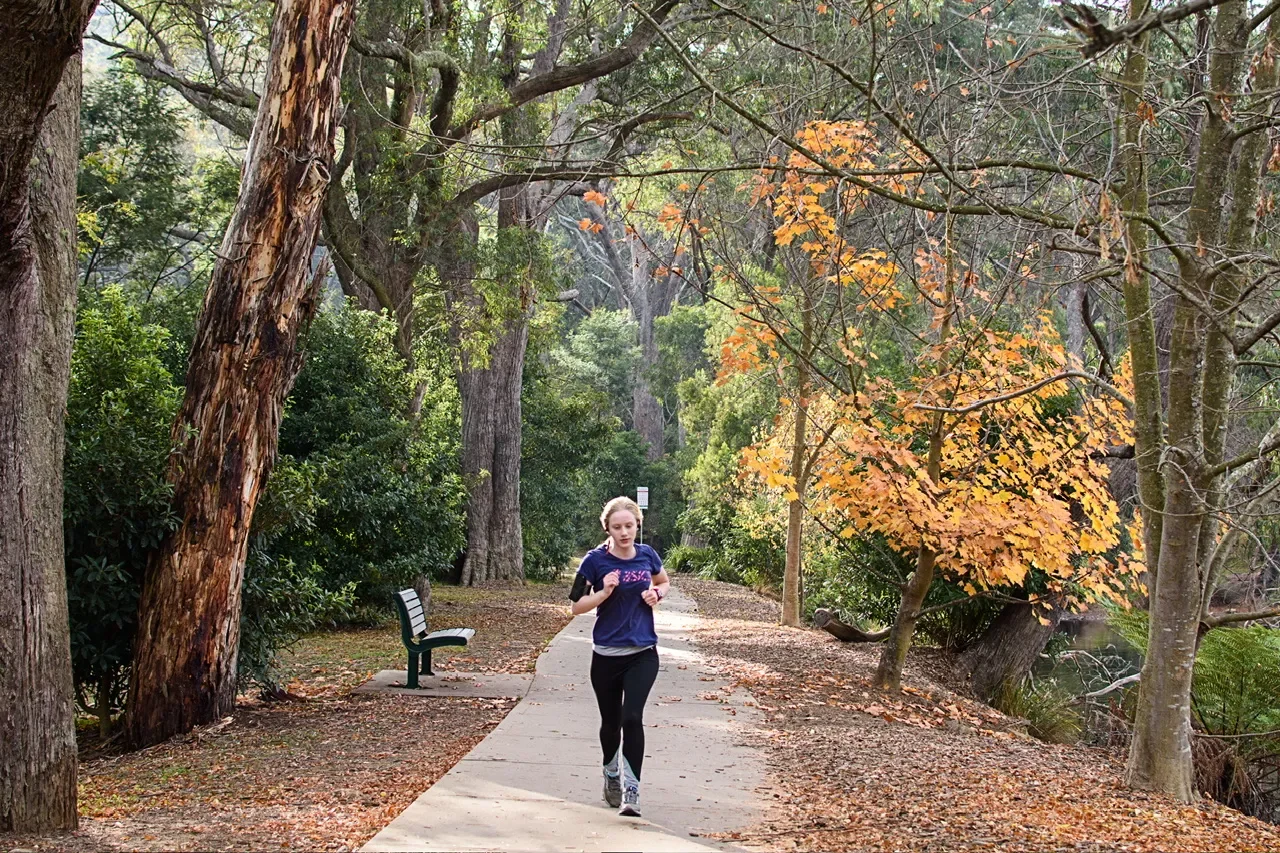
Later on, I realised I’d been blind. I hadn’t seen something very obvious. Gemma-Rose uses decimals all the time when she’s running. She has no trouble working out her distances and speed and all the other interesting data she wants to know about. How does she do the maths involved? I don’t know. What goes on inside her head is a mystery to me. All I know is that she’s got her own way of doing things. She doesn’t use the conventional methods and language that most of us associate with maths.
It seems to me that children are quite capable of finding their own ways to work out mathematical problems without first having to learn all the rules of multiplication and addition and fractions and everything else we try and drum into them. Or maybe they work out the rules for themselves? Or could they see no relevance to the problems we present them on paper? They just don’t make any sense.
Recently, there’s been a new development in my daughter’s maths story. A couple of months or so ago, Gemma-Rose said, “Mum, can you find me a maths course to work through?”
My jaw dropped. Gemma-Rose wanted to do a maths course?
“I think it’s time I learnt maths properly.”
“Are you sure you want to do a course? I could find a more interesting way for you to do maths.”
“I just want to learn maths. I don’t need it to be turned into a game or something fun.”
Gemma-Rose had decided for herself that she was ready to learn maths in a conventional way. She thinks it’s time she learnt the language everyone else is using.
So I searched for an appropriate maths course and then presented Gemma-Rose with a few options. She looked at them all and decided to try the Kahn Academy one.
“Would you like me to watch the videos with you and help you with the quizzes?” I asked.
“No, thank you, Mum. I can do this by myself.”
Can a child who has had hardly any formal maths experience do a maths course by herself? Yes, she can. I’ve been very surprised. There have been a couple of occasions when Gemma-Rose has asked for my help, but basically, she is working through the program on her own.
Where did Gemma-Rose start with the course? At the beginning? No, we looked at the questions together and then Gemma-Rose decided to start with a year 7 unit. That’s high school maths (in Australia). And that seems to be the right place for her. Gemma-Rose is less than one year behind her school-age peers. That’s not bad, is it? It just goes to show that she picked up all the primary school maths skills on her own just by living life with a bit of maths strewing thrown in for interest and information.
What’s ahead? I don’t know. Gemma-Rose will decide. I trust she knows what she’s doing.
So what do we do when our unschoolers aren’t interested in maths? We could push them to do it anyway. But if I had done this, would Gemma-Rose’s aversion to maths have increased? Would she never have come to the point where she is willing to know more? I think it’s very likely the trust between us would have been destroyed. And I’m sure this would have flowed over into other aspects of our lives.
Instead, I think it’s far better to listen to our kids, support them, and trust they will learn what they need to know in their own time.
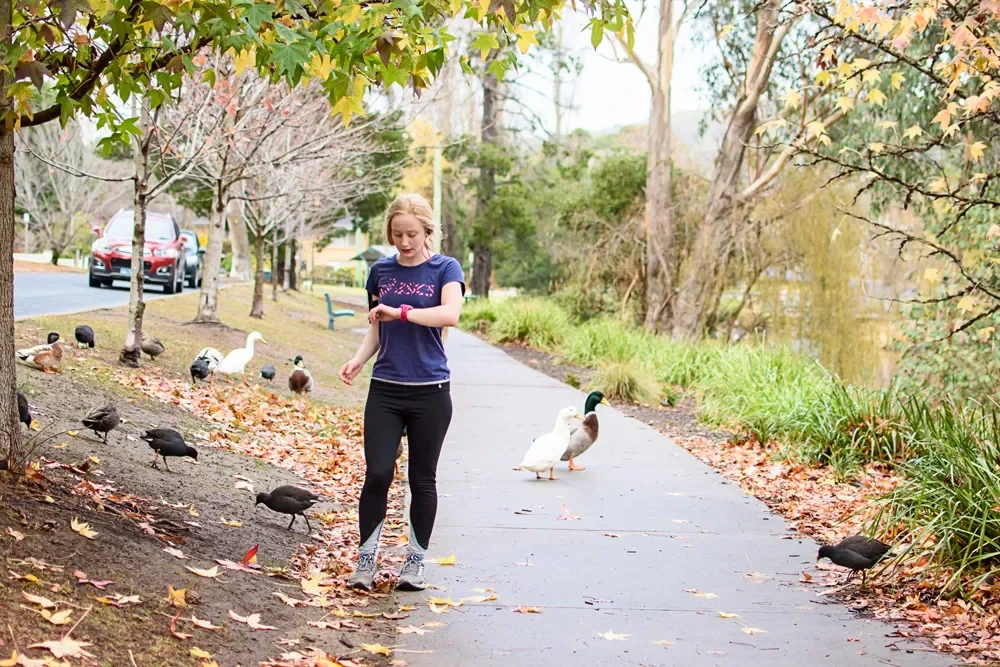
Of course, the photos are of Gemma-Rose. In the top one, she’s running laps of the lake. In the second photo, she’s just finished her run. She’s checking her time and distance on her GPS watch.