I have been struggling with this post for a while now, and wondering why I’m having so much trouble finding the right words. And I have decided it’s the language. I want to write a story from a personal point of view like I normally do. And I can’t. We had such a gradual transition to unschooling, I didn’t really face the issues I want to write about. So why write about them? Shouldn’t I leave this topic to someone else? Maybe. Or I could start the conversation, share some ideas and ask you to add your experiences. Is that okay?
We have been discussing the transition from structured homeschooling to unschooling. Today I thought we might talk about trust. Now that we’re not directing our children’s learning, do we believe they will learn what they need to know in their own time, without us interfering? Do we trust our kids? Or deep down, do we still have certain expectations? Perhaps if they’re not being fulfilled we will start to doubt what we’re doing.
So what can we do? How do we learn to trust our children and let go completely?
Perhaps we have to be convinced unschooling actually ‘works’, though I hate the word ‘works’. To me unschooling isn’t about giving a child the best educational advantage we can. It’s not about getting high grades and being accepted into university. It’s not just an alternative to other homeschooling methods. Rather it’s a way of life that nurtures and respects children so they become the people they are meant to be. We don’t get to the end of unschooling and congratulate ourselves because it ‘worked’. The fact is we don’t get to the end of unschooling. It’s a life process.
Anyway, back to being convinced… Perhaps we need to do a lot of reading of books and blogs and forums, immerse ourselves in unschooling. We can read other people’s stories, see unschooling in action, find kindred spirits who will support and encourage us. Of course, there are some sites we should definitely avoid. You’ll come across lots of people who’ll tell you unschooling is an irresponsible and lazy thing to do. Just Google those words. Or perhaps not. They’re wrong but their words might creep into our heads and make us doubt.
How do I know these people are wrong? Usually, they haven’t tried unschooling for themselves or given it a fair go. They don’t really understand what it’s all about. But they think they do. They have strong opinions which they can’t back up with any practical experience. I always look at the language a writer uses. Is it factual or mere opinion, well-balanced or emotional? I try to find out a little about the author’s background. Is there a particular reason they want to convince us unschooling isn’t the way to go? (Of course, no one can sell curricula to unschoolers.) More often, I just click off a negative site and go somewhere else. Because there’s plenty of good news stories elsewhere, written by people who really understand the principles of unschooling.
If we are convinced that children can be trusted, perhaps the next step is deciding whether we are being called to do it. For us homeschooling wasn’t working. We were not happy. My relationships with my children were suffering. When I look back, I am grateful we found our way to unschooling. I am guessing that most people who are transitioning to unschooling weren’t happy with their previous situation. They are looking for something better. If everything was working, why change?
But still, it’s a big step. We might feel it’s better to stay with what we know, stick with the crowd, instead of setting off into the relatively unknown. When doubts arise, structured homeschooling can look like a safer option. We can convince ourselves that all the pain and sacrifice we were experiencing were just an inevitable part of a parent’s duty. Isn’t anything worth doing, worth the pain? Don’t we have to homeschool through the tough times as well as the good? Perhaps we bailed out too early. We just have to knuckle down and do what God expects of us, right? We have no choice.
But we do have a choice. I honestly don’t think God intends for us to suffer while homeschooling. We will inevitably suffer in life but we don’t have to invite it in. We need strong joyful families in order to withstand the battles of life and remain faithful. If there is a better way for our family, maybe God wants us to choose it. Could He want us to trust?
Trust? Isn’t this what God wants everyone to do every day? We have to live in the moment, take one day at a time, do our best but leave the future to God who will always look after us. He has a plan for each and every one of us, our children included. I think if we are doing what God wants us to do, He will ensure we are successful.
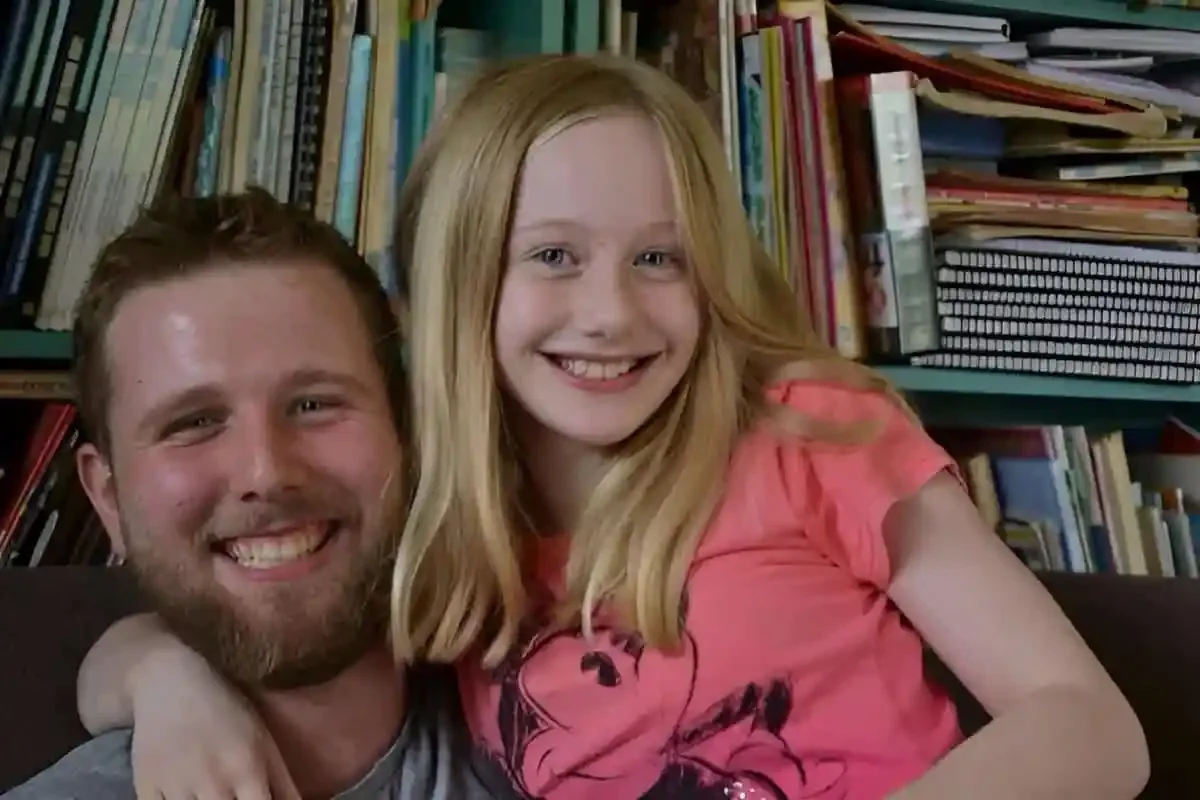
And I do believe that God wants me to unschool our children. It is such a loving, respectful and joyful way of life, in tune with every aspect of Christian life. I have learnt so much about love while we have been unschooling. And I’m still learning. The treasures are continually being revealed. I only have to pull one of my girls onto my knee and hug her tight to know I am doing exactly what I’m meant to be doing. What is more important than love?
Okay, so we believe in the principles of unschooling. We feel we are being called to do it. We have the knowledge and friends to support us. But occasionally the thought goes through our heads: “Are they really learning anything?” Now I hate my records book. I find it an intrusion on my day and my life in general. I don’t like recording all the learning experiences of my children. But even if I don’t need evidence my kids are learning, the educational authorities are demanding it, so the record book is here to stay.
But if I do get out my book and flip through the pages, I can definitely see my children are learning. Maybe detailed records, which we can look back on whenever we are feeling insecure, will help. And these records don’t necessarily need to contain evidence of projects and essays. We can observe so much just by looking, listening and talking to our children.
I don’t know if any of that is at all helpful. But it might start us thinking and someone else may have some better ideas.
Before I finish, I’ll list a few books which you might find interesting and helpful.
Any book by John Holt
Homeschooling with Gentleness: a Catholic Discovers Unschooling by Suzie Andres
A Little way of Homeschooling: 13 Families Discover Catholic Unschooling by Suzie Andres
I Believe in Love by Fr Jean d’Elbee
Abandonment to Divine Providence by Jean-Pierre de Caussade
I know there are a lot of other wonderful resources. Perhaps you can mention your own favourites in the comments.
And if you have any other questions related to this conversation, I’d be happy to give it some thought and write an appropriate post.
Images: Joy and love: Isn’t that what it’s all about?