One Molecule at a Time
I ask, “Watch the movie or read the book? Which one do you prefer doing first?” Imogen replies without hesitating, “Read the book.” Then she adds, “Unless the book is based on a movie.”
Maybe most people would agree with my daughter. I might be the odd one out because if I’m going to sample both versions, I always choose the movie or miniseries first. Whenever I’ve done things the other way around, I’ve given up on the movie in a matter of minutes.
Several weeks ago, I watched the Apple TV series Lessons in Chemistry and enjoyed it enough to want to read the book. I knew the story would be more extensive in the novel: many details are left out when turning a book into a film. I hoped by reading the novel, my enjoyment would be multiplied.
So, I bought a paper copy of Lessons in Chemistry:
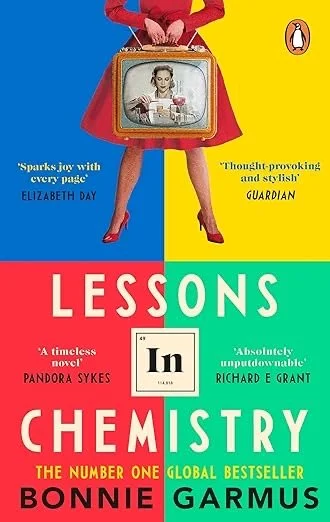
Chemist Elizabeth Zott is not your average woman. In fact, she would be the first to point out that there is no such thing.
But it’s the early 1960s and her all-male team at Hastings Research Institute take a very unscientific view of equality.
Forced to leave her job at the institute, she soon finds herself the reluctant star of America’s most beloved cooking show, Supper at Six.
But as her following grows, not everyone is happy. Because as it turns out, Elizabeth Zott isn’t just teaching women to cook.
She’s daring them to change the status quo. One molecule at a time.
One molecule at a time. I know about molecules. I studied biochemistry for two years at university. I chose this subject even though all my friends avoided it. They preferred the other option, zoology, and couldn’t understand why I wanted to do a subject we all agreed was difficult. But I guess that’s why I wanted to do biochemistry. I like a challenge. I also like being different and not following the crowd.
Elizabeth Zott was undoubtedly different: a female chemist in a male-dominated lab. In the 1960s, men expected women to be attractive, have children and provide them with beautifully run homes. There was no place for a clever woman like Elizabeth who wanted to have a career.
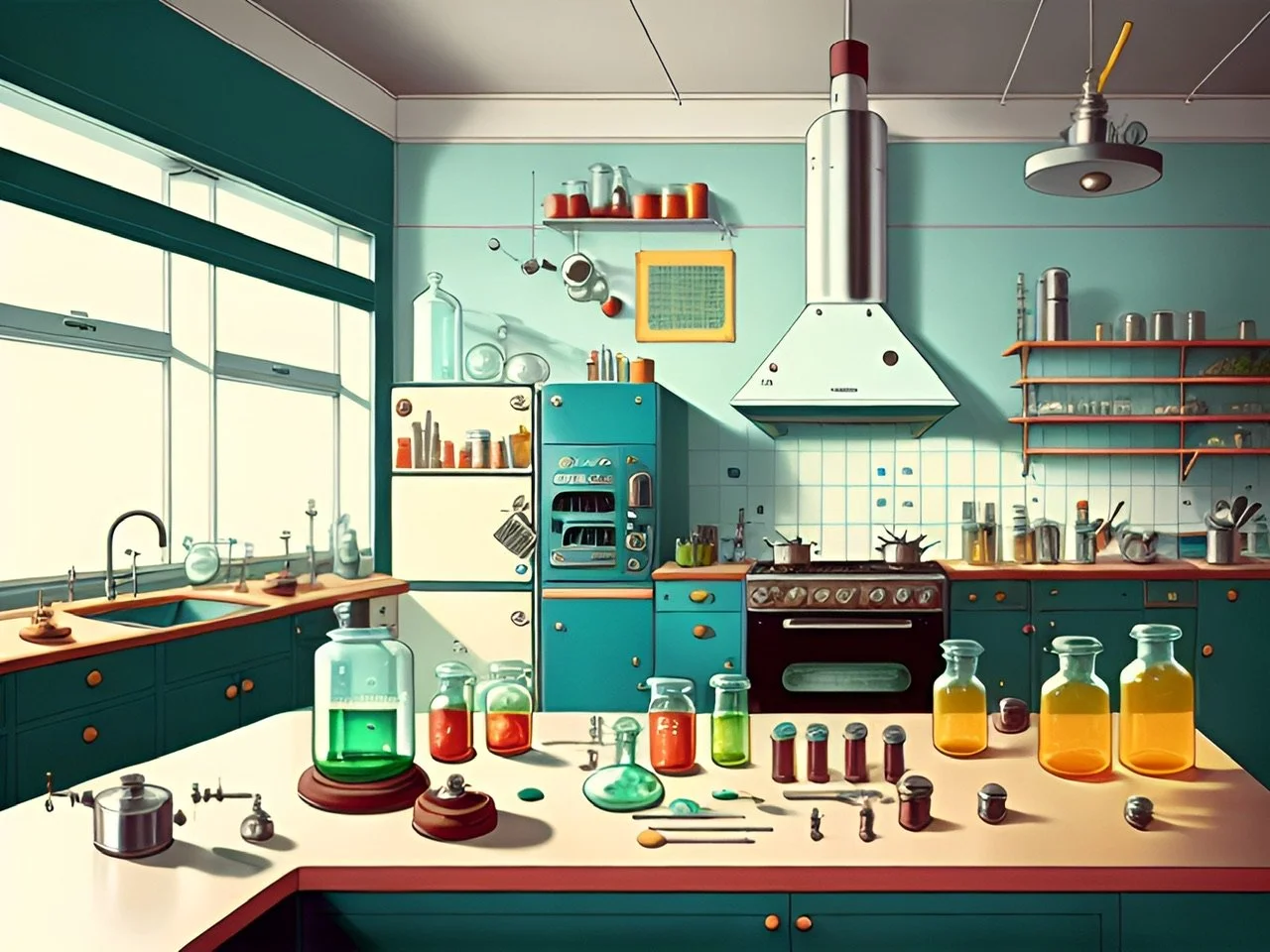
I liked how Elizabeth dared to be different. When she was fired from her job in a research lab because she was pregnant and unmarried, she set up a lab in her kitchen. Then, when Elizabeth needed money to support her child, whom she loved dearly despite declaring she never wanted to have children, she got a job as a presenter on a cooking show, doing things her way, much to the dismay of the TV producer. Elizabeth turned cooking into chemistry, and her mostly female audience soaked up the science. She used her show to encourage women to value themselves, use their talents and follow their dreams.

Lessons in Chemistry is a bestseller. Most people love it. And, yes, it is, on the whole, a delightful story. But it wasn’t a 5-star read for me. Its anti-religious flavour spoilt the book. The main characters are atheists, which is okay. I don’t expect novels to be populated with people just like me. I like seeing the world from unfamiliar angles. But I felt Bonnie Garmus used her book to bash the Catholic Church. Of course, the Church isn’t perfect. At times, it deserves its criticism. But it isn’t responsible for all the world’s problems. Garmus’ one-sided picture of the Catholic Church is a problem. Her Church isn’t the one I know.
As I read Lessons in Chemistry, I kept hoping Garmus would leave a little space for God in her story. Perhaps her characters would realise science can’t explain everything. Maybe the complexities of the world, revealed by scientific research, would point the way to a Creator. But that didn’t happen. By the end of the book, even the sympathetic religious characters were questioning their faith.
One last thought: the characters in Lessons in Chemistry used God’s name a lot in their speech, which is strange considering they didn’t believe He exists.
Images
A 1960’s kitchen that’s also a lab.
A kitchen at a film studio.
Created by me with the help of AI!
So, what do you think?
Book or movie first? Have you read or seen Lessons in Chemistry? What did you think? If you’re a mother, do you have a dream that extends beyond motherhood? Is there something you’d like to change, step by step, ‘one molecule at a time’? Perhaps you’re already using your talents to change the world?